

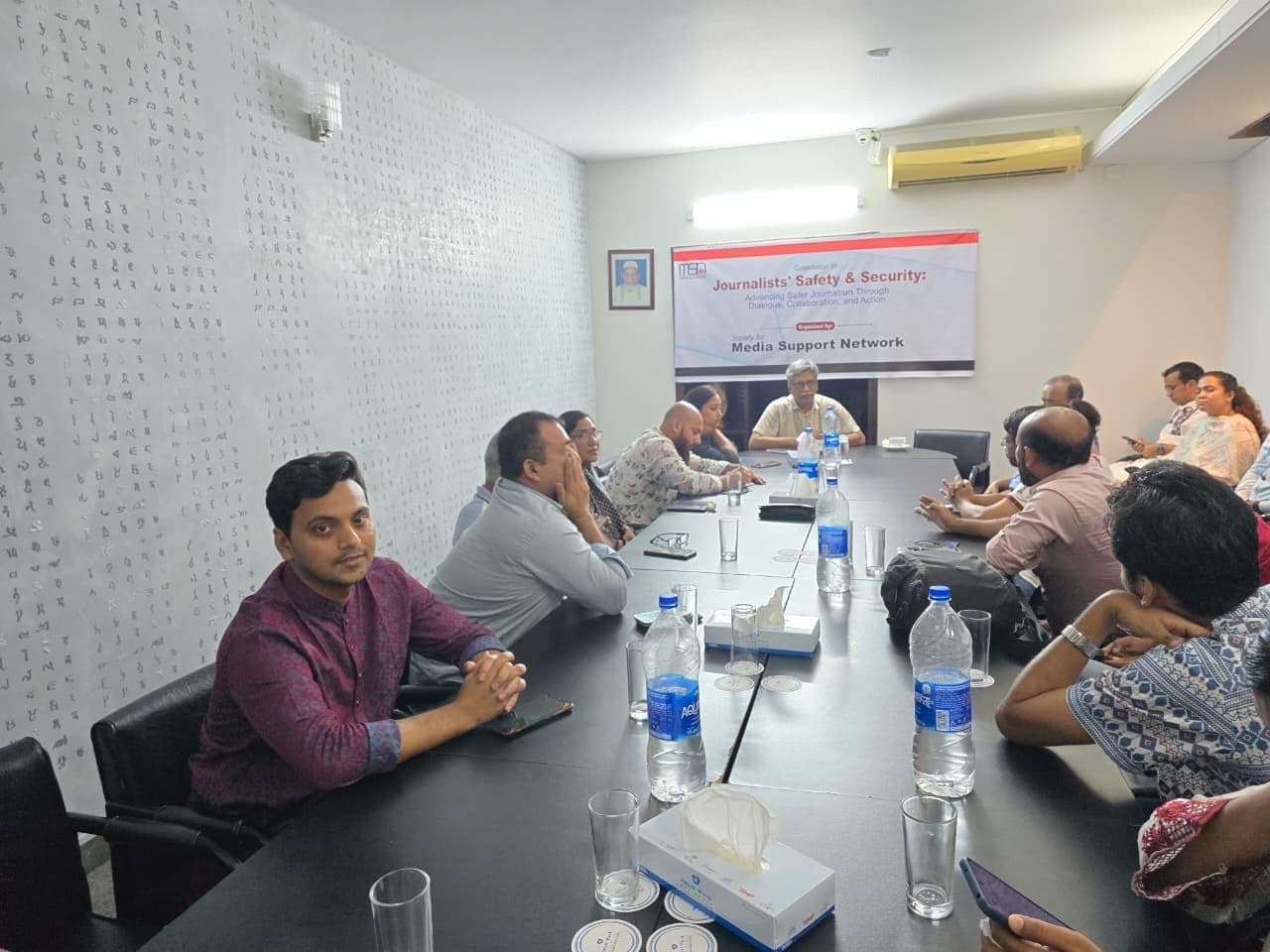
Source: Media Support Network
Building a Safer Space for Journalists: Chattogram Journalists Call for Stronger Safety and Support
For journalists working in the field, safety is no longer only about avoiding physical attacks. Threats, legal pressure, traumatic experiences, financial insecurity and digital risks are increasingly becoming part of their professional lives. These concerns came to the forefront at a discussion on “Journalists’ Safety & Security: Advancing Safer Journalism Through Dialogue, Collaboration and Action” organized by the Society for Media Support Network (MSN) in Chattogram. Journalists from different media outlets shared their experiences and discussed what is needed to make journalism safer and more sustainable. A key demand from the discussion was the establishment of a Media Commission as a dedicated institution to support journalists facing safety, legal, professional and other challenges. Participants also urged the government to introduce a Journalists Safety Act to ensure journalists receive legal protection and justice when they face threats, attacks or harassment. The recent Ferdous Shipyard incident in Chattogram also highlighted the risks journalists can face while reporting from dangerous locations. Saiful Alam of Daily Purbokon stressed the importance of conducting risk assessments before going to the field, noting that many journalists either do not conduct such assessments or do not know how to do them properly. Mental health emerged as another major concern. Faruque Munir of Kaler Kantho called for regular sychological and financial support for traumatized journalists, along with legal guidance. Abu Azad of Daily Sun, who has experienced being held hostage, emphasized that nothing is more important for a traumatized journalist than mental support, not even financial assistance. He highlighted the lasting impact that traumatic experiences can have on journalists even after they return from the field. Financial insecurity is also affecting journalists’ wellbeing. Lotifa Ansari of Deepto Television said regional journalists are often neglected by national media outlets and may receive their salaries after two or three months. Such delays, she noted, create serious mental pressure when journalists struggle to pay rent and meet basic needs. The discussion also focused on the need for better safety tools and guidance. Farhad Shikdar of C Plus emphasized updated digital tools that can help journalists stay safe and make better decisions in difficult situations. FM Mizanur Rahman of The Daily Star stressed the need for both digital and physical safety measures, along with regular mentorship on how and when to use them. The call for a Media Commission and a Journalists Safety Act reflected a shared concern among the participants: journalists need more than individual safety skills. They need a reliable system that can support them when professional risks turn into legal, physical, psychological or financial crises.